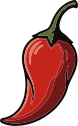
The Jwala pepper, also known as the Indian finger hot pepper or Pusa Jwala, is a popular Capsicum annuum cultivar native to Gujarat, India. It delivers solid medium-to-hot heat with a distinctive apple-like fruity flavor, making it a staple in Indian curries, chutneys, and pickles.
Native to the Gujarat region of India, particularly the Kheda and Mehsana districts, the Jwala chili (from Sanskrit/Hindi meaning 'intense flame' or 'volcano') is one of the most widely used hot peppers in Indian home cooking. These slender, finger-shaped pods typically measure 5 to 13 cm long and about 0.5 cm wide, with a slightly wrinkled or glossy texture. They ripen from light green through orange to vibrant red. Scoville ratings range from 20,000 to 50,000 SHU depending on the variety and growing conditions, placing them between a spicier serrano and a mild cayenne. The flavor is complex: a pungent aroma with lightly fruity apple notes, a touch of sweetness, and clean heat that enhances rather than overwhelms dishes. The vigorous, prolific plants grow to about 90 cm tall and are highly productive, thriving in containers or garden beds. Often called Pusa Jwala after the Indian agricultural research cultivar, these peppers are essential for authentic regional recipes and dry well into flakes or powder.
No photos of Jwala here yet. Got one? Share it with us.
The name 'Jwala' derives from Sanskrit/Hindi meaning 'intense flame' or 'volcano'. It is the most popular chili in India, especially in Gujarat, and Pusa Jwala is a named cultivar developed through agricultural research.
Promote a product tied to Jwala? This slot is open.
Reach out →Lightly fruity with distinct apple notes, complex spicy and slightly sweet with a pungent aroma
Huge shout-out to the breeders, growers, researchers, and seed savers linked below — their independent work is what lets us fact-check our own. Go visit them.
These references are used to verify what we publish — not as the source of the content itself. Seed catalogs, breeder pages, research papers, and cultivar databases let us cross-check every fact before it lands here. Open any card to read the original or dig deeper.