
Mattapeño
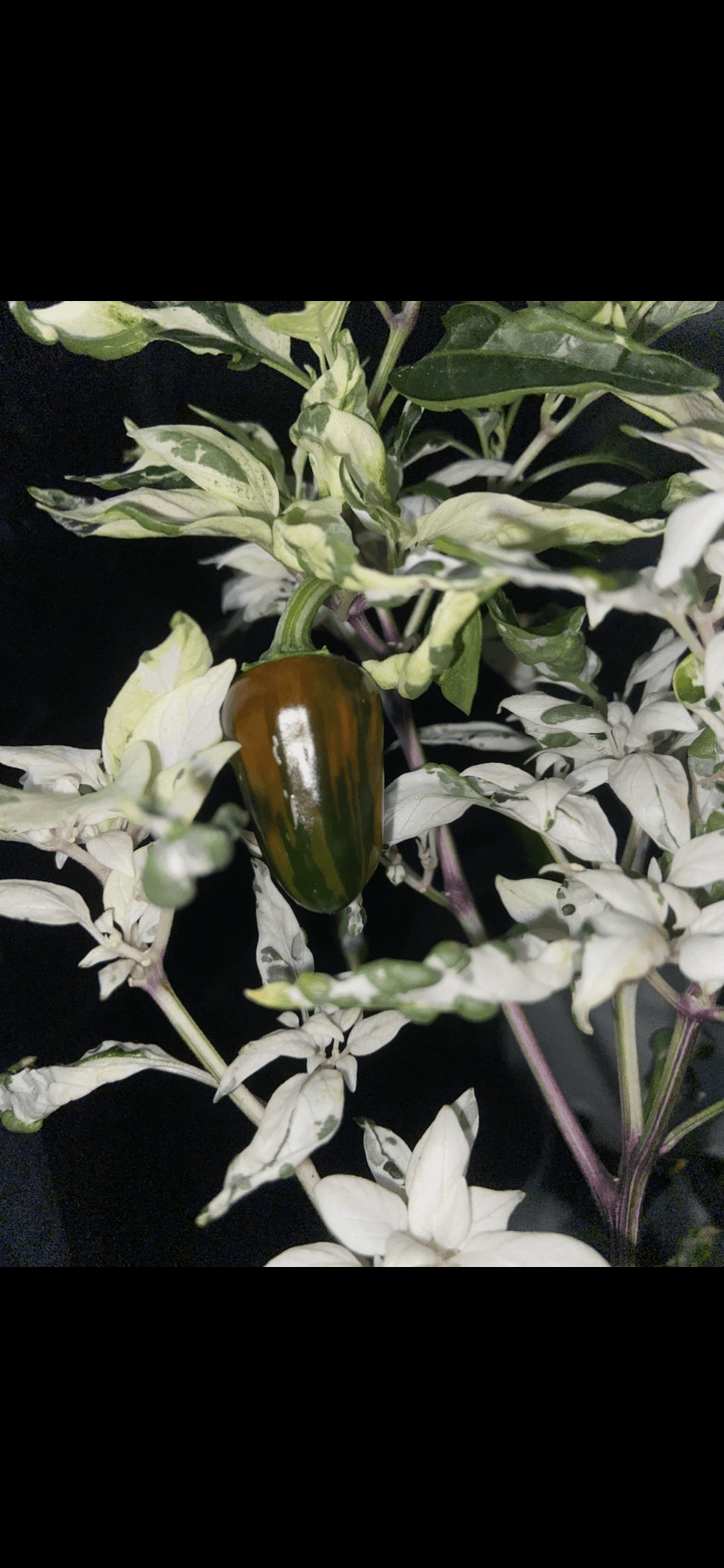
The Mattapeño is a striking variegated jalapeño discovered in a US commercial greenhouse by Matt Ohlendorf. It features heavily marbled white-and-green leaves, purple stems, and green-striped pods that ripen to red with classic earthy flavor and medium heat. Prized for its ornamental beauty and versatility in pickling, salsas, and stuffing.
The Mattapeño, also known as Mattapeno, is a captivating Capsicum annuum cultivar developed through selective breeding from a natural mutation found in a commercial greenhouse. The plant features heavily variegated leaves with creamy white and green patterns, often accompanied by purple stems, making it a favorite among ornamental pepper growers. The pods are traditional jalapeño-shaped, starting green with vertical white stripes and corking as they mature, eventually ripening to a deep red. With a Scoville range of 5,000 to 11,000 SHU, it delivers a balanced heat that is earthy and subtly sweet when fully ripe. This pepper excels in pickling, stuffing, salsas, grilling, and fresh use. Plants grow to 3-4 feet tall, are prolific producers, and thrive in containers or gardens with full sun and moderate watering. Discovered and stabilized by Matt Ohlendorf, it has become popular in the hot pepper community for its unique aesthetics and reliable performance. It is a slow starter that does not like overwatering but becomes highly productive once established.
Gallery
Backstory
Discovered by Matt Ohlendorf while working in a commercial greenhouse; believed to be a natural mutation of a jalapeño plant. Stabilized through years of selection and grown out to preserve the variegated traits.
Promoted products
Promote a product tied to Mattapeño? This slot is open.
Reach out →Flavor
Earthy with a hint of sweetness when fully ripe, balancing its medium heat with classic jalapeño notes.
Culinary uses
Q&A
Substitutions
Appearance
Growing
Origin detail
Tags
Sources
Huge shout-out to the breeders, growers, researchers, and seed savers linked below — their independent work is what lets us fact-check our own. Go visit them.
These references are used to verify what we publish — not as the source of the content itself. Seed catalogs, breeder pages, research papers, and cultivar databases let us cross-check every fact before it lands here. Open any card to read the original or dig deeper.
- mattspeppers.comMatt's Peppers official site detailing discovery and characteristics
- tyler-farms.comTyler Farms product page for Mattapeno pepper seeds
- bohicapepperhut.comBohica Pepper Hut Mattapeño seeds description
- hrseeds.comHR Seeds Mattapeno Pepper details
- fataliiseeds.netFatalii Seeds Mattapeno product information